


Key Takeaways
Before diving in, here's a quick snapshot of what you'll learn:
- 3D printing builds real physical objects from digital files — layer by layer
- A 3D printer works by reading a sliced digital model and depositing material precisely
- It's used for prototyping, medical devices, education, construction, and everyday home use
- 3D printing in Australia is growing fast — across industries, schools, and home workshops
- Getting started is more affordable and accessible than most people think
What Is 3D Printing?
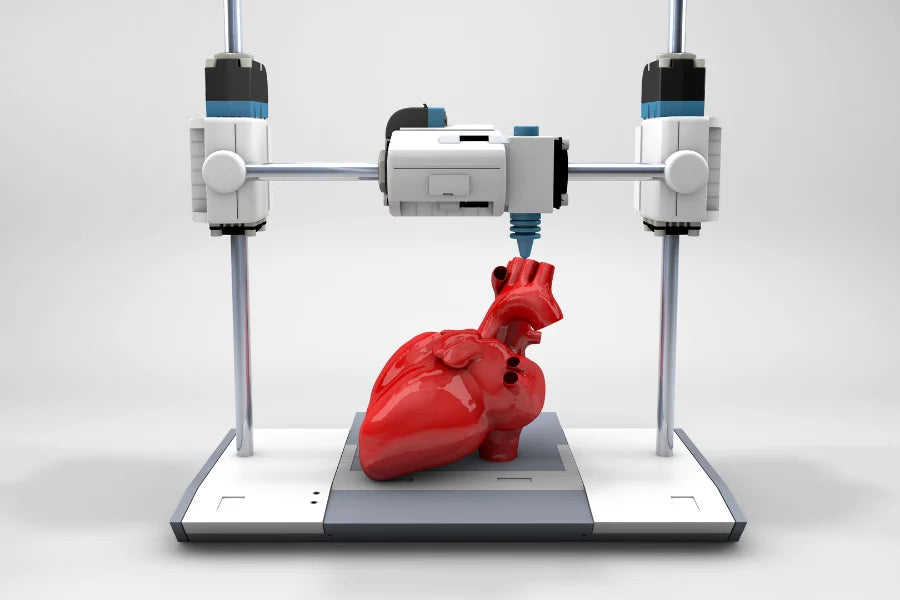
3D printing is the process of creating a three-dimensional physical object from a digital file. The printer builds the object layer by layer — like stacking thousands of ultra-thin slices on top of each other — until the full shape is formed.
It's also called additive manufacturing, because material is added rather than cut away (unlike traditional machining or carving). This makes it incredibly efficient, especially for complex shapes that would be difficult or expensive to produce any other way.
The concept has been around since the 1980s, but it's only in the last decade that it's become truly accessible to everyday people — and that shift is changing how things are designed, prototyped, and made.
What Is a 3D Printer?
A 3D printer is a machine that reads a digital file and physically constructs an object by depositing, curing, or fusing material layer by layer.
Think of it like a standard inkjet printer — but instead of printing ink flat on paper, it prints material upward in three dimensions until a complete object is formed. The "ink" in most home printers is plastic filament. In industrial machines, it might be resin, nylon powder, or even metal.
Most printers connect to a computer or work from a memory card. You load your digital model, set your preferences, and the printer does the rest — sometimes over several hours, sometimes in under 30 minutes.
Note: The printer itself is just one part of the equation. You also need design software, slicing software, and the right material. Together, these form the complete 3D printing workflow.
We will dive deeper into the 3d
How Does 3D Printing Actually Work?
The process can be broken down into three stages:
1. Design — You start with a 3D digital model, usually created using CAD (Computer-Aided Design) software like Fusion 360, Tinkercad, or downloaded from platforms like Thingiverse or Printables.
2. Slicing — The digital model is run through slicing software (such as Cura or PrusaSlicer), which divides it into hundreds or thousands of horizontal layers and generates the instructions the printer follows.
3. Printing — The printer reads those instructions and deposits or cures material layer by layer until the object is complete. Depending on complexity and size, this can take anywhere from 20 minutes to several days.
Important: The quality of your print depends on three things — the quality of your design, the right material choice, and your printer settings. Getting all three right takes practice, but the learning curve is genuinely rewarding.
Types of 3D Printing Technology
Not all 3D printers work the same way. Here are the most common technologies you'll come across:
| Technology | Full Name | How It Works | Best For |
|---|---|---|---|
| FDM | Fused Deposition Modelling | Melts plastic filament and deposits it layer by layer | Hobbyists, prototyping, education |
| SLA | Stereolithography | Uses UV light to cure liquid resin | Detailed models, jewellery, dental |
| SLS | Selective Laser Sintering | Laser fuses powdered material | Industrial parts, functional prototypes |
| MSLA | Masked SLA | LCD screen cures resin quickly | High-detail prints at lower cost |
| Metal 3D Printing | DMLS / SLM | Laser sinters or melts metal powder | Aerospace, medical implants |
For most beginners and hobbyists, FDM is the go-to starting point — it's affordable, widely supported, and uses materials that are easy to find in Australia.
Common 3D Printing Materials
The material you choose directly impacts the strength, flexibility, appearance, and function of your print.
PLA (Polylactic Acid) is the most beginner-friendly filament. It's plant-based, easy to print, and comes in hundreds of colours. It's not the most heat-resistant, but for display models, household items, and learning, it's hard to beat.
PETG offers a step up in durability and slight flexibility, making it great for functional parts that need to handle mild stress or moisture exposure.
For more demanding applications:
- ABS — strong and heat-resistant but can warp without proper enclosure and ventilation
- TPU — flexible, rubber-like filament used for phone cases, gaskets, and wearable items
- Nylon — tough and wear-resistant, popular in engineering and mechanical applications
- Resin (for SLA/MSLA) — delivers exceptional surface detail but requires more post-processing and safety precautions
3D Printing in Australia: Where Things Stand
Australia has quietly built a strong and fast-growing 3D printing ecosystem. What was once limited to universities and large manufacturers has now expanded into small businesses, schools, medical facilities, startups, and home workshops right across the country.
Adoption Across Industries
Australian industries are finding practical, high-value uses for 3D printing:
- Healthcare & Medical: Hospitals and dental clinics use 3D printing to produce custom prosthetics, surgical guides, dental aligners, and anatomical models for pre-surgical planning. Companies like Anatomics, based in Melbourne, have been producing 3D-printed titanium implants for patients globally.
- Construction & Architecture: Australian firms are exploring large-scale 3D-printed housing. Icon and Luyten 3D (an Australian company) made headlines with Australia's first 3D-printed home in Victoria — completed faster and at lower cost than conventional builds.
- Education: Schools and universities across Australia have integrated desktop 3D printers into STEM programs, giving students hands-on experience in design, engineering, and manufacturing thinking.
- Defence & Aerospace: RMIT University and several defence contractors use 3D printing for lightweight component prototyping and part replacement.
- Agriculture & Mining: Remote communities and mine sites use 3D printing to produce replacement parts on-demand, reducing costly delays waiting for parts to be shipped.
The Hobbyist and Maker Community
Beyond industry, Australia has a thriving maker culture. Makerspaces and Fab Labs in cities like Sydney, Melbourne, Brisbane, and Perth give community members access to professional-grade printers without the upfront cost of ownership. Online communities such as Reddit's r/3Dprinting and local Facebook groups are active, helpful, and full of Australians sharing tips, failures, and finished prints.
From experience: Many Australian hobbyists start with an entry-level FDM printer and quickly find themselves upgrading — not because the first printer fails, but because the possibilities become addictive. Starting simple is always the right move.
Getting Started: What You'll Need
If you're thinking about diving into 3D printing in Australia, here's a practical starting point:
Hardware:
- A reliable FDM printer (brands like Bambu Lab, Creality, Prusa, and Anycubic are popular locally)
- A print surface (most modern printers come with magnetic PEI sheets)
- Basic tools: spatula, flush cutters, needle-nose pliers
Software (all free to start):
- Tinkercad — browser-based, beginner-friendly design tool
- Fusion 360 — more advanced, free for hobbyists
- Cura or PrusaSlicer — for slicing your models before printing
Materials:
- Start with a quality PLA filament — 1kg spools are the standard
- Store filament in airtight containers or dry boxes to avoid moisture absorption, especially in humid Australian climates
Learning Resources:
- YouTube channels like Makers Muse (run by an Australian creator) are an excellent starting point
- The Printables and Thingiverse platforms offer thousands of free models to practise with
Real-World Use: What People Are Actually Making
One of the most common questions people ask is: "But what do you actually use it for?"
Here's a realistic look at what hobbyists and small businesses in Australia are regularly producing:
- Replacement parts for appliances, furniture, and vehicles that are no longer manufactured
- Custom brackets, mounts, and organizers tailored to exact home dimensions
- Cosplay props and accessories — the cosplay community is one of the largest adopters
- Small-batch product prototyping for entrepreneurs validating product ideas before committing to injection moulding
- Personalised gifts — keyrings, nameplates, phone stands, jewellery
- Educational models — geological formations, architectural miniatures, scientific structures
- RC car parts, drone frames, and mechanical components
The shift from novelty to utility is real. Once you solve your first practical problem with a printed part, the value of having a printer at home becomes immediately obvious.
Challenges and Limitations to Know About
3D printing is powerful, but it's not magic. Being aware of the limitations saves frustration:
Print failures are part of the process. Bed adhesion issues, layer shifts, stringing, and warping are common — especially for beginners. Most are fixable once you understand the cause.
It's not fast for everything. Large or complex prints can take 8–20+ hours. It's not the right tool when you need something immediately.
Post-processing takes time. Most prints need some cleanup — removing supports, sanding, priming, or painting — before they look "finished."
Material limitations matter. Standard FDM prints aren't food-safe, highly heat-resistant, or UV-stable without specific materials and coatings.
Understanding these realities upfront makes for a far more enjoyable experience.
FAQ: 3D Printing in Australia
Is 3D printing legal in Australia?
Yes, 3D printing is completely legal in Australia. However, printing certain items — such as weapons or items that infringe copyright — is subject to existing Australian laws.
How much does a 3D printer cost in Australia?
Entry-level FDM printers start from around $300–$500 AUD. Mid-range machines with better quality and automation features range from $700–$1,500 AUD. Professional and industrial printers can cost tens of thousands.
Can I start a business with a 3D printer in Australia?
Absolutely. Many Australians run small Etsy shops, local product businesses, or prototyping services from home. The barrier to entry is low compared to traditional manufacturing.
Where can I buy filament in Australia?
Filament is available from local retailers and online stores across Australia. Buying locally reduces import time and supports Australian suppliers.
Do Australian schools use 3D printers?
Yes. Many primary and secondary schools, particularly those with active STEM programs, have incorporated desktop 3D printers into classrooms.
What's the most popular 3D printer brand in Australia?
Bambu Lab has grown rapidly in popularity due to its speed and automation features. Creality remains popular for budget-conscious buyers, while Prusa has a loyal following for reliability and open-source support.